
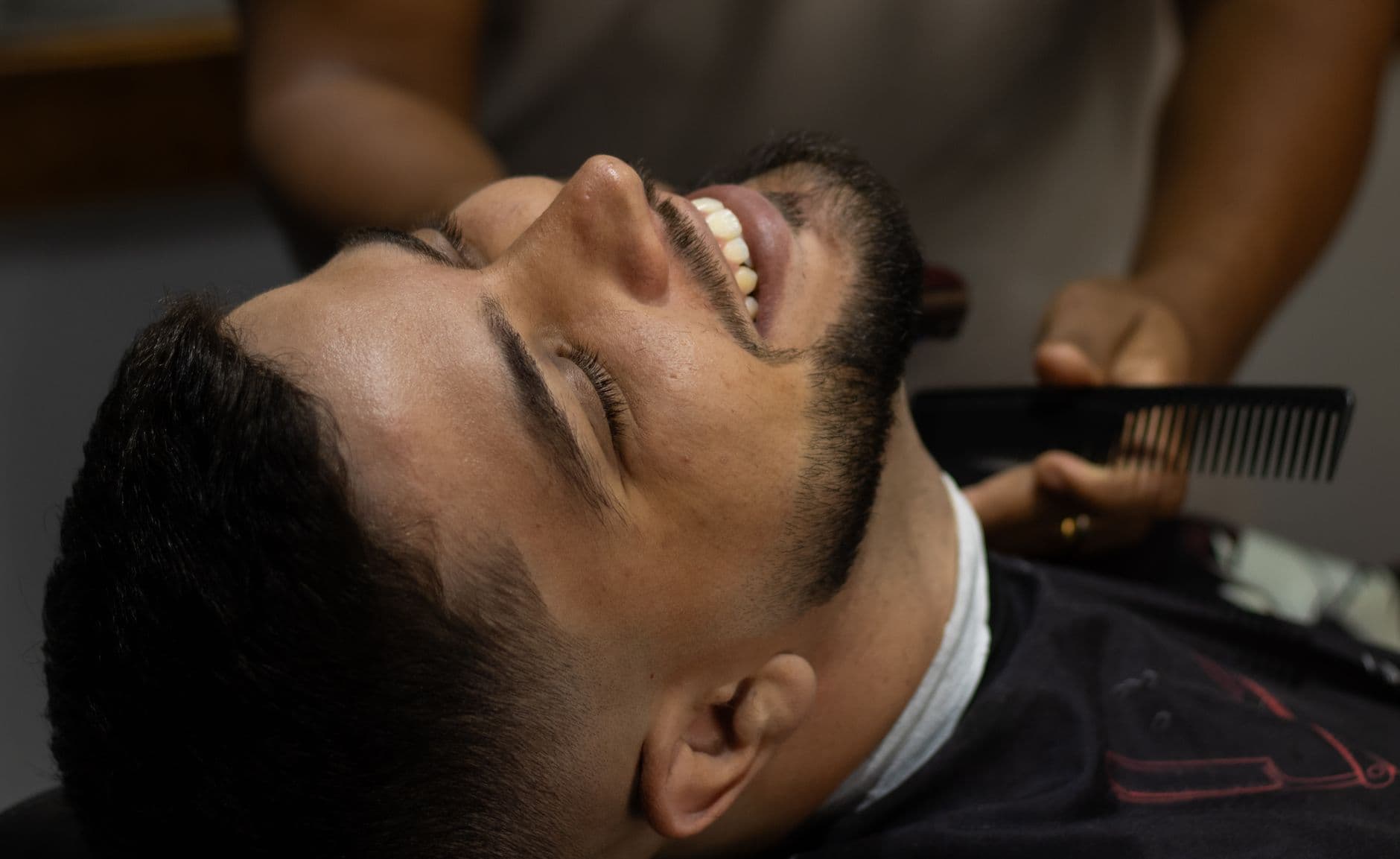
For many women and men in Pune, dealing with unwanted facial hair is a constant struggle. Routine visits to the salon for threading, waxing, or tweezing bring only brief relief. Within a few days, coarse stubble often returns. Over time, repeated mechanical pulling can irritate delicate facial skin. Many individuals end up with red bumps, painful ingrown hairs, and dark patches across the jawline, chin, or upper lip.
The main drawback of salon grooming is that it treats hair as an isolated cosmetic issue. It removes the hair shaft at the surface, but it cannot alter what happens beneath the skin. When internal body signals stimulate facial hair growth, surface methods simply cannot halt the hair cycle. Without evaluating internal health, people remain stuck in an exhausting routine of skin irritation and rapid regrowth.
A clinical assessment by an experienced dermatologist bridges the gap between medical diagnostics and procedural care. By uncovering underlying hormonal or metabolic drivers before starting laser hair reduction, patients in Pune can make clear, informed choices based on medical facts rather than temporary fixes.
Medical and Hormonal Triggers Behind Hirsutism
In women, the growth of coarse, dark hair in areas typical of male patterns—such as the chin, neck, chest, or upper lip—is medically termed hirsutism. Every face has fine, pale vellus hair. However, when hair follicles receive signals from male hormones called androgens, or when follicles are unusually sensitive to normal hormone levels, they begin to produce thick, pigmented terminal hairs.
Polycystic ovarian disease (PCOD) is one of the most common medical reasons for this change. When hormone levels stay out of balance, hair follicles keep shifting into coarse growth. Undergoing aesthetic procedures without identifying these internal signals often leads to disappointment. Even if a laser disables existing hairs, active hormonal triggers can recruit new follicles across the face.
For this reason, a medical assessment starts with a thorough history and targeted diagnostic tests. Under established clinical guidelines, a dermatologist may recommend blood investigations to check hormone function. These tests include serum luteinising hormone (LH), follicle-stimulating hormone (FSH), prolactin, dehydroepiandrosterone sulphate (DHEAS), and free testosterone (Standard guidelines of care: Laser and IPL hair reduction). The dermatologist may also suggest an abdominal or pelvic ultrasound to check the ovaries for signs of PCOD (Standard guidelines of care: Laser and IPL hair reduction).
Managing hirsutism requires coordinated medical care. Clinical guidelines recommend that dermatologists collaborate with gynaecologists and endocrinologists whenever necessary (Standard guidelines of care: Laser and IPL hair reduction). This team approach addresses internal hormone imbalances while planning laser hair reduction (Standard guidelines of care: Laser and IPL hair reduction). Treating both the internal trigger and the hair follicle produces far better long-term outcomes than cosmetic sessions alone.
Skin Reactions from Threading, Waxing, and Plucking
When facial hair returns quickly, many people turn to aggressive salon methods. Frequent threading, waxing, plucking, and chemical hair removal creams are common choices. Yet repeatedly pulling hair from its root places physical stress on the facial skin and hair follicles.
This physical trauma frequently causes folliculitis, an inflammation of the hair follicle that creates tender red bumps or small pustules. On melanin-rich Indian skin, inflammation regularly leads to post-inflammatory hyperpigmentation (PIH). Months of threading or waxing can leave the jawline and chin noticeably darker than the rest of the face. Many patients find that trying to remove hair creates a stubborn pigmentation problem.
Repeated epilation can also cause hairs to curl back into the skin as they regrow. These ingrown hairs create chronic swelling that resembles acne breakouts. Over time, persistent follicular inflammation can trigger true acne or lead to acne scars. Men face similar troubles when shaving against the grain on the lower neck, which often produces painful razor bumps and tissue marks.
Anyone planning to start laser sessions must also follow specific pre-treatment instructions. Clinical guidelines require patients to stop waxing, plucking, bleaching, thermolysis, and electrolysis in the target areas once they decide to start laser hair reduction (Standard guidelines of care: Laser and IPL hair reduction). Lasers target melanin inside the hair root. When plucking or waxing pulls the root out, the laser has no target to work on, making the session ineffective.
Choosing Safe Laser Wavelengths for Indian Skin
Laser hair reduction relies on selective photothermolysis. The laser emits light that is absorbed by melanin in the hair follicle. That light turns into heat, disabling the cells responsible for hair growth. However, Indian skin (Fitzpatrick types IV to VI) also contains rich amounts of melanin in the outer skin layer, known as the epidermis. If a clinic uses the wrong laser, the surface skin absorbs too much light. This can cause superficial burns, blisters, and patchy skin darkening.
To protect darker skin tones, dermatologists use lasers with longer wavelengths. Longer wavelengths allow light to bypass high amounts of epidermal melanin and penetrate deeper into the dermis to reach the hair follicle safely (Efficacy and safety of diode laser for facial hair reduction in hir…, Nd:YAG Laser Hair Removal in Fitzpatrick Skin Types IV to VI).
Long-Pulsed 1,064 nm Nd:YAG Lasers
The long-pulsed 1,064 nm Nd:YAG laser is widely regarded as a safe and reliable option for darker skin types (Nd:YAG Laser Hair Removal in Fitzpatrick Skin Types IV to VI). Its longer wavelength bypasses melanin in the surface skin and penetrates deep into dermal tissue (Nd:YAG Laser Hair Removal in Fitzpatrick Skin Types IV to VI). In clinical practice for skin types IV to VI, dermatologists generally begin treatments with a pulse duration of 3 milliseconds (ms), a 12-mm spot size, and fluences between 24 and 32 J/cm² (Nd:YAG Laser Hair Removal in Fitzpatrick Skin Types IV to VI). Using proper parameters and epidermal cooling allows darker skin to undergo treatment safely and effectively (Nd:YAG Laser Hair Removal in Fitzpatrick Skin Types IV to VI).
Diode Laser Systems
Diode lasers are also longer-wavelength devices that penetrate deep into the dermis (Efficacy and safety of diode laser for facial hair reduction in hir…). Because light reaches deeper structures, it causes less epidermal absorption while delivering sufficient damage to the hair follicle (Efficacy and safety of diode laser for facial hair reduction in hir…). In a clinical evaluation of women with skin types III to V, an 805 nm diode laser delivered safe and statistically significant facial hair reduction at fluences up to 36 J/cm² (Efficacy and safety of diode laser for facial hair reduction in hir…).
Understanding the Risk of Paradoxical Hair Growth
A responsible medical consultation always addresses potential side effects. One rare issue is paradoxical hypertrichosis, sometimes called compensatory hypertrichosis. This term refers to the unexpected stimulation of fine, pale hairs into more noticeable hair growth near or within the treated area.
While uncommon, this occurrence can cause genuine distress for patients (Standard guidelines of care: Laser and IPL hair reduction). In a study of 73 women receiving facial diode laser treatments for hirsutism, paradoxical hair growth in the form of multiple small vellus hairs occurred in 2 patients (Efficacy and safety of diode laser for facial hair reduction in hir…).
To prevent this reaction, dermatologists assess hair thickness carefully before treating. Applying weak or sub-therapeutic laser energy to very fine vellus hair carries a higher risk of triggering growth. If compensatory hypertrichosis does occur, national guidelines note that it may need to be treated with lasers (Standard guidelines of care: Laser and IPL hair reduction).
Dermatologist Oversight and Treatment Planning
Because Indian skin requires precise energy control, laser hair reduction should never be treated as an unsupervised beauty parlour procedure. National care guidelines in India state that laser hair removal may be practiced by any qualified dermatologist holding a DVD or MD who has received adequate background training during postgraduation, at a dedicated laser training centre, or through focused workshops (Standard guidelines of care: Laser and IPL hair reduction).
Under these guidelines, a trained nurse assistant or junior doctor may perform the procedure after proper training (Standard guidelines of care: Laser and IPL hair reduction). However, this must take place only after informing the patient, under the direct supervision of the senior physician, and the physician retains ultimate responsibility (Standard guidelines of care: Laser and IPL hair reduction). Direct medical supervision ensures that energy settings, pulse widths, and cooling are adjusted based on how the patient's skin responds.
Doctor supervision is equally vital when other skin concerns exist. When chronic ingrown hairs create active breakouts, a dermatologist can combine laser hair reduction with medical acne treatment and acne scar treatment. If past threading has left dark marks, the doctor can add gentle chemical peels or laser toning to restore an even tone.
Patients should also approach care with practical expectations. Modern lasers offer significant, long-term hair reduction and make new growth much finer and slower. However, medical procedures do not eliminate every single follicle forever. This is especially true when internal hormone levels continue to fluctuate over time.
Medical Guidance for Facial Hair Care in Kalyani Nagar
Effectively managing unwanted facial hair means looking beyond quick salon sessions and investigating internal causes. Combining targeted diagnostic testing with safe, skin-appropriate laser wavelengths helps patients achieve noticeable hair reduction while protecting the tone and barrier of Indian skin.
At Skin Essence in Kalyani Nagar, Pune, clinical evaluation forms the foundation of every care plan. The centre is led by Dr. Daksha Patel, MBBS, MD (Skin & VD), a dermatologist and cosmetologist. Every treatment plan is designed around the patient's specific skin type and individual goals rather than a rigid package.
Whether you are managing stubborn hirsutism, soothing folliculitis from mechanical hair removal, or combining hair reduction with pigmentation and acne scar treatment, scheduling a clinical consultation in Kalyani Nagar, Pune provides a safe, scientifically guided path forward.
Frequently asked questions
Why is medical evaluation necessary before laser hair removal?
A clinical assessment identifies underlying hormonal or metabolic drivers such as PCOD. Treating internal triggers alongside laser reduction prevents active hormones from continually stimulating new coarse hair follicles.
What lasers are safe for Indian skin types?
Longer-wavelength lasers like the long-pulsed 1,064 nm Nd:YAG and diode lasers are safe for darker skin. They bypass high concentrations of surface melanin to target deeper hair roots without causing burns or hyperpigmentation.
Why should salon waxing and plucking be avoided before laser sessions?
Lasers work by targeting the melanin located inside the hair root. Waxing and plucking pull the root out entirely, leaving no target for the laser and making the treatment ineffective.
What is paradoxical hypertrichosis?
Paradoxical hypertrichosis is an uncommon response where low-energy laser application stimulates fine vellus hairs into thicker growth. Dermatologists carefully assess hair thickness beforehand to minimise this risk.