
For many working professionals in Pune, leaving adolescence behind does not bring an automatic end to facial breakouts. It is remarkably common for men and women in their twenties, thirties, and beyond to discover sudden, painful bumps flaring along their jawline, cheeks, and neck. Facing persistent breakouts while navigating busy work schedules and daily commutes across areas like Kalyani Nagar, Viman Nagar, and Koregaon Park can feel deeply frustrating, especially when standard drugstore washes fail to provide relief.
Adult acne is a distinct medical condition with biological characteristics that set it apart from teenage blemishes. Research published in the Indian Journal of Dermatology, Venereology and Leprology indicates that adult acne in India predominantly affects women, with females comprising 82.1% of clinical study patients and males accounting for 17.9% (A clinico-epidemiological study of adult acne: Is it different from…). Furthermore, 73.2% of adult patients experience persistent acne that began during their teenage years and carried into adulthood, while late-onset breakouts account for 26.8% (A clinico-epidemiological study of adult acne: Is it different from…).
Managing these stubborn lesions requires stepping away from aggressive commercial scrubs and internet remedies. A structured, clinical approach led by an MD dermatologist focuses on identifying underlying internal triggers, protecting the skin barrier, and restoring clarity safely.
Clinical Patterns: How Adult Acne Manifests in Indian Skin
Adolescent acne often presents as extensive blackheads and whiteheads across the forehead, nose, and central face—commonly referred to as the T-zone. In contrast, adult acne in Indian skin follows a noticeably different pattern, characterised by deeper, more inflammatory lesions.
In clinical studies of Indian adult acne patients, purely superficial comedonal lesions are relatively rare, observed in only 6% of cases (A clinico-epidemiological study of adult acne: Is it different from…). Instead, the vast majority present with inflammatory papules and nodules: 55% of patients present with Grade II acne, 28% with Grade III, and 12% with Grade IV (A clinico-epidemiological study of adult acne: Is it different from…). These red, tender bumps sit deeper within the dermis and are far more prone to leaving behind persistent post-inflammatory hyperpigmentation (PIH) and textural scarring if mishandled.
The anatomical distribution in adult patients is also highly specific to the lower two-thirds of the face. Clinical documentation identifies the most common facial sites as:
- Cheeks: The most common site involved, documented in 81% of adult patients (A clinico-epidemiological study of adult acne: Is it different from…).
- Chin: Affected in 67% of adult acne cases (A clinico-epidemiological study of adult acne: Is it different from…).
- Mandibular area (jawline): Involved in 58.3% of presentations (A clinico-epidemiological study of adult acne: Is it different from…).
- Forehead and nose: Documented in 51.7% and 18.3% of cases respectively, demonstrating less involvement than the lower face (A clinico-epidemiological study of adult acne: Is it different from…).
Whether breakouts are persistent from youth or emerge suddenly as late-onset adult acne, their concentration along the mandibular line and lower cheeks strongly points to specialised clinical drivers rather than superficial surface dirt alone (A clinico-epidemiological study of adult acne: Is it different from…).
Internal Drivers: Hormonal Fluctuations and Systemic Influences
One of the primary drivers of persistent lower-face breakouts in adult patients is internal hormonal regulation. Hormone-related acne is clinically defined by deep-seated, cystic lesions distributed along the jawline and chin, often displaying cyclical premenstrual flares, alongside potential signs such as hirsutism or menstrual irregularities (Hormone therapy in acne).
Fluctuations in circulating androgens stimulate the sebaceous glands to produce thicker, more cohesive sebum, which blocks the pilosebaceous follicle (Hormone therapy in acne). However, patients often become confused when routine blood tests return normal hormone profiles. In a clinical study of Indian adult acne, clinical features suggesting hormonal influences—such as premenstrual flares (11.7%) and hirsutism (5.7%)—were readily documented, yet only 3.04% of female patients had elevated androgen markers on standard laboratory tests (A clinico-epidemiological study of adult acne: Is it different from…).
This discrepancy occurs because end-organ sensitivity plays a critical role. The androgen receptors within your facial sebaceous glands can be hyper-responsive to completely normal baseline levels of circulating hormones. Attempting to clear these deep hormonal lesions with over-the-counter drying lotions is rarely effective, as topical spot treatments cannot alter follicular androgen receptor responsiveness or regulate internal biological cycles. A thorough evaluation by an MD dermatologist is necessary to examine systemic signs and determine whether medical therapy is required.
Pune's Urban Factors and the Shortcomings of Commercial Cleansers
While internal factors create the biological predisposition for adult breakouts, local environmental stressors in Pune frequently compound the problem. Daily commuting along busy corridors such as Nagar Road, Kharadi, or Senapati Bapat Road exposes the skin to elevated levels of particulate matter, vehicular exhaust, and road dust. When fine environmental pollutants settle into pores and mix with daily sweat and natural sebum, they oxidise surface lipids and create an ideal microenvironment for inflammatory acne flares.
In an attempt to combat this persistent feeling of grime and oiliness, many professionals turn to commercial anti-acne cleansers, abrasive physical scrubs, and clarifying astringents. Unfortunately, this often worsens the condition due to several fundamental limitations:
- Barrier disruption: High-foaming, alkaline cleansers strip away vital intercellular lipids, weakening the skin barrier and triggering reactive rebound sebum production.
- Superficial reach: Cleansers only remain on the skin for seconds, which cannot reach the deeper dermis where inflammatory papules and nodules originate.
- Mechanical aggravation: Abrasive physical scrubs cause micro-trauma across already inflamed skin, exacerbating redness and heightening the risk of dark marks.
Calming persistent adult breakouts requires strengthening the skin's barrier integrity rather than stripping it raw with aggressive, unguided washing.
In-Clinic Dermatological Interventions: Peels and Clinical Extractions
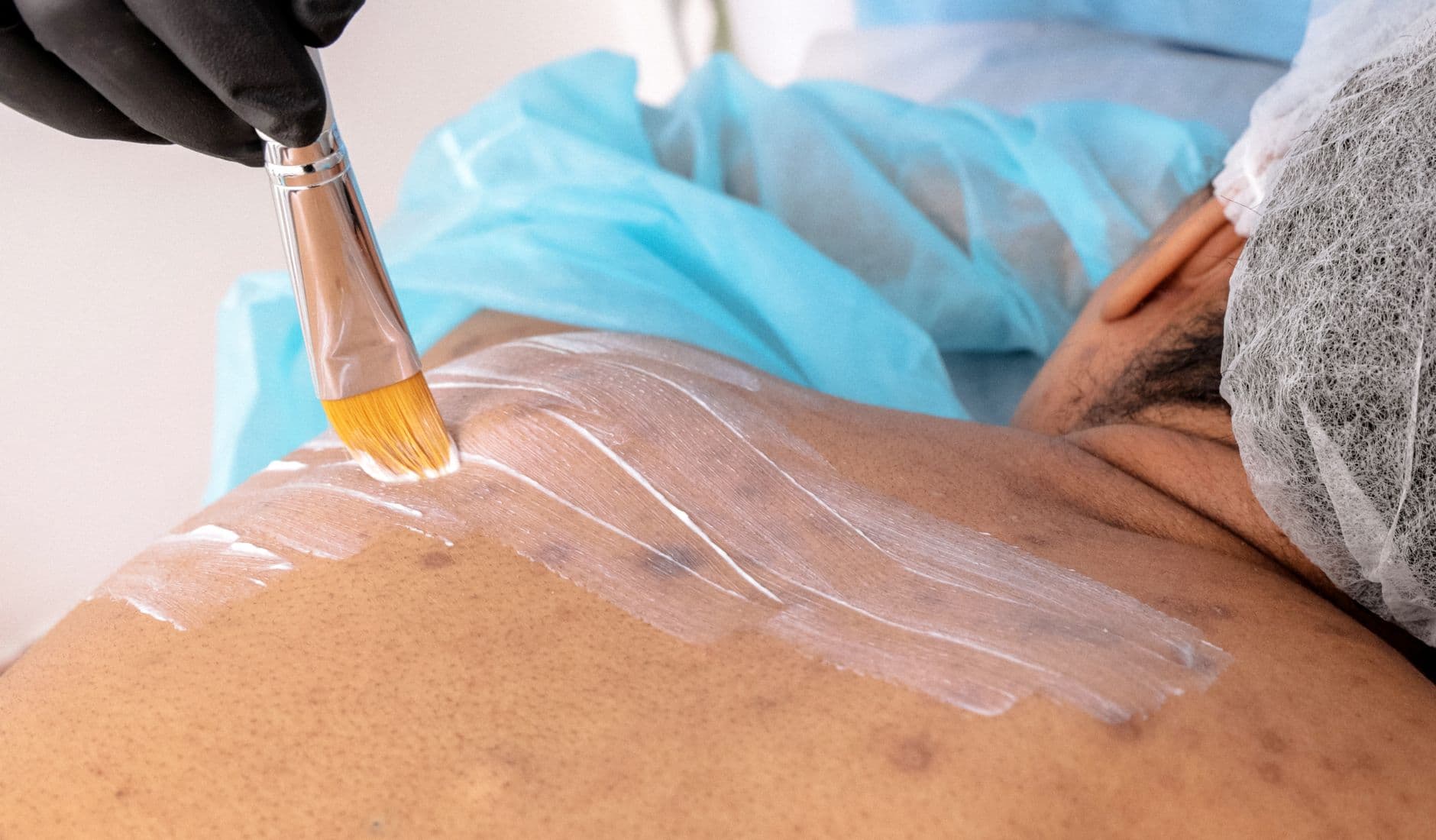
When active adult breakouts do not settle with gentle skincare, professional in-clinic procedures provide targeted, medical-grade intervention. Dermatologists utilise controlled procedures to clear follicular blockages, reduce microbial proliferation, and calm active inflammatory papules safely.
Clarifying Chemical Peels and the Necessity of Priming
Specialised chemical peels work by loosening the microscopic bonds between cohesive dead cells in the follicular canal, accelerating epidermal turnover, regulating sebum output, and exerting anti-inflammatory effects. However, administering chemical peels on Indian skin tones (predominantly Fitzpatrick skin types IV to VI) demands strict clinical care to prevent complications like post-inflammatory hyperpigmentation (A perspective on what's new in chemical peels).
A crucial step in this process is skin priming. Clinical guidelines emphasise that priming should begin at least 2 to 4 weeks prior to a chemical peel, especially in darker skin types (A perspective on what's new in chemical peels). Priming thins the thickened stratum corneum to ensure uniform penetration of peeling solutions, accelerates tissue healing, and substantially lowers the risk of post-inflammatory hyperpigmentation (A perspective on what's new in chemical peels). Topical priming regimens tailored by a dermatologist are maintained until 3 to 5 days before the peel procedure (A perspective on what's new in chemical peels).
Sterile In-Clinic Comedone Extraction
Attempting to squeeze or pop deep bumps at home introduces mechanical trauma to surrounding skin tissues, frequently rupturing the follicular wall beneath the surface and turning a minor closed comedone into a severe inflammatory nodule. In a clinical setting, an MD dermatologist or trained clinical staff uses sterile extractors to remove open and closed comedones gently without tearing the epidermis. This mechanical decongestion relieves follicular pressure and enhances the penetration of topical dermatological therapies.
Essential Daily Maintenance and Non-Comedogenic Sun Protection
Professional clinic procedures must be reinforced by a sensible, non-irritating home care routine. When the skin barrier is healthy and balanced, it is far more resilient against active breakouts and heals without leaving persistent dark marks.
Key evidence-based principles for home care include:
- Daily broad-spectrum sun protection: Applying a broad-spectrum sunscreen that blocks both UVA and UVB rays every morning protects healing skin and helps prevent post-inflammatory dark marks from worsening (A perspective on what's new in chemical peels).
- Gentle, non-soap cleansing: Wash the face gently using a non-soap cleanser, avoiding rubbing, scrubbing, scratching, or picking at active lesions to preserve barrier integrity (A perspective on what's new in chemical peels).
- Suspending salon exfoliation and waxing: Hair removal techniques such as waxing or electrolysis, alongside mechanical dermaplaning and harsh salon facials, must be avoided for at least 3 to 4 weeks prior to chemical peels (A perspective on what's new in chemical peels).
- Barrier support with bland emollients: Applying a regular bland emollient calms irritated skin, maintaining moisture balance while active treatments or peeling cycles resolve (A perspective on what's new in chemical peels).
Preventing Scarring and the Role of Adjunctive Skin Treatments
The most significant long-term consequence of unmanaged adult acne is persistent textural scarring. Because adult lesions are primarily Grade II and Grade III inflammatory papules, prolonged inflammation damages surrounding dermal collagen and elastin fibres (A clinico-epidemiological study of adult acne: Is it different from…). Controlling active inflammatory acne as early as possible remains the single most effective way to prevent atrophic, rolling, and boxcar scars.
Once active inflammatory breakouts are stabilised, secondary clinical procedures can be planned to address residual concerns. While active acne treatment focuses on calming lesions and unclogging follicles, dedicated acne scar treatment protocols can be introduced later to smooth uneven dermal texture and fade deeper post-inflammatory marks.
For both women and men, adjunctive procedures such as laser hair reduction can also play an important supportive role along the lower face and neck. Thick coarse hair follicles along the jawline, chin, and beard area frequently suffer from recurrent folliculitis or ingrown hairs that mimic or aggravate acne breakouts. Medical laser hair removal planned specifically for Indian skin tones reduces follicular density and mechanical shaving irritation, eliminating a major mechanical trigger for recurring lower-facial bumps.
Consulting a Dermatologist in Pune for Lasting Skin Clarity
Adult acne is a complex, multifactorial medical condition influenced by internal hormones, skin barrier mechanics, and urban environmental stresses. Because adult skin tends to be drier and more susceptible to post-inflammatory pigmentary changes than adolescent skin, relying on harsh self-treatments or standard salon facials often prolongs the cycle of inflammation.
Skin Essence, located in Kalyani Nagar, Pune, provides advanced medical dermatology and cosmetic treatments for women and men. Led by Dr. Daksha Patel, MBBS, MD (Skin & VD), a dermatologist and cosmetologist with over 17 years of experience who has treated more than 3,00,000 patients and performed over 10,000 cosmetic procedures, the clinic does not use fixed, one-size-fits-all charts. Every acne and acne scar treatment plan is thoroughly customised by the dermatologist around your specific skin type, clinical grade of acne, and long-term goals.
If you are struggling with persistent breakouts or recurring marks, scheduling an evaluation with an MD dermatologist in Kalyani Nagar, Pune can help you identify your unique triggers and begin a safe, structured path toward clearer skin.
Frequently asked questions
How is adult acne different from adolescent acne in Indian skin?
Unlike adolescent acne which commonly centers on the T-zone with comedones, adult acne in Indian skin predominantly presents on the lower two-thirds of the face—especially the cheeks, chin, and jawline—with deeper inflammatory papules and nodules.
Why do adult acne breakouts occur if hormone blood tests are normal?
Even when circulating hormone levels appear normal on standard blood tests, the androgen receptors within facial sebaceous glands can be hyper-responsive, leading to increased sebum production and deep breakouts along the jawline and chin.
Why is skin priming necessary before chemical peels for adult acne?
For Indian skin tones, priming for two to four weeks prior to a chemical peel thins the stratum corneum for even penetration, accelerates tissue healing, and substantially lowers the risk of post-inflammatory hyperpigmentation.
Can laser hair removal help reduce breakouts along the jawline?
Yes. Laser hair removal reduces follicular density and shaving irritation along the jawline, chin, and neck, preventing recurrent folliculitis and ingrown hairs that can mimic or aggravate adult acne.