
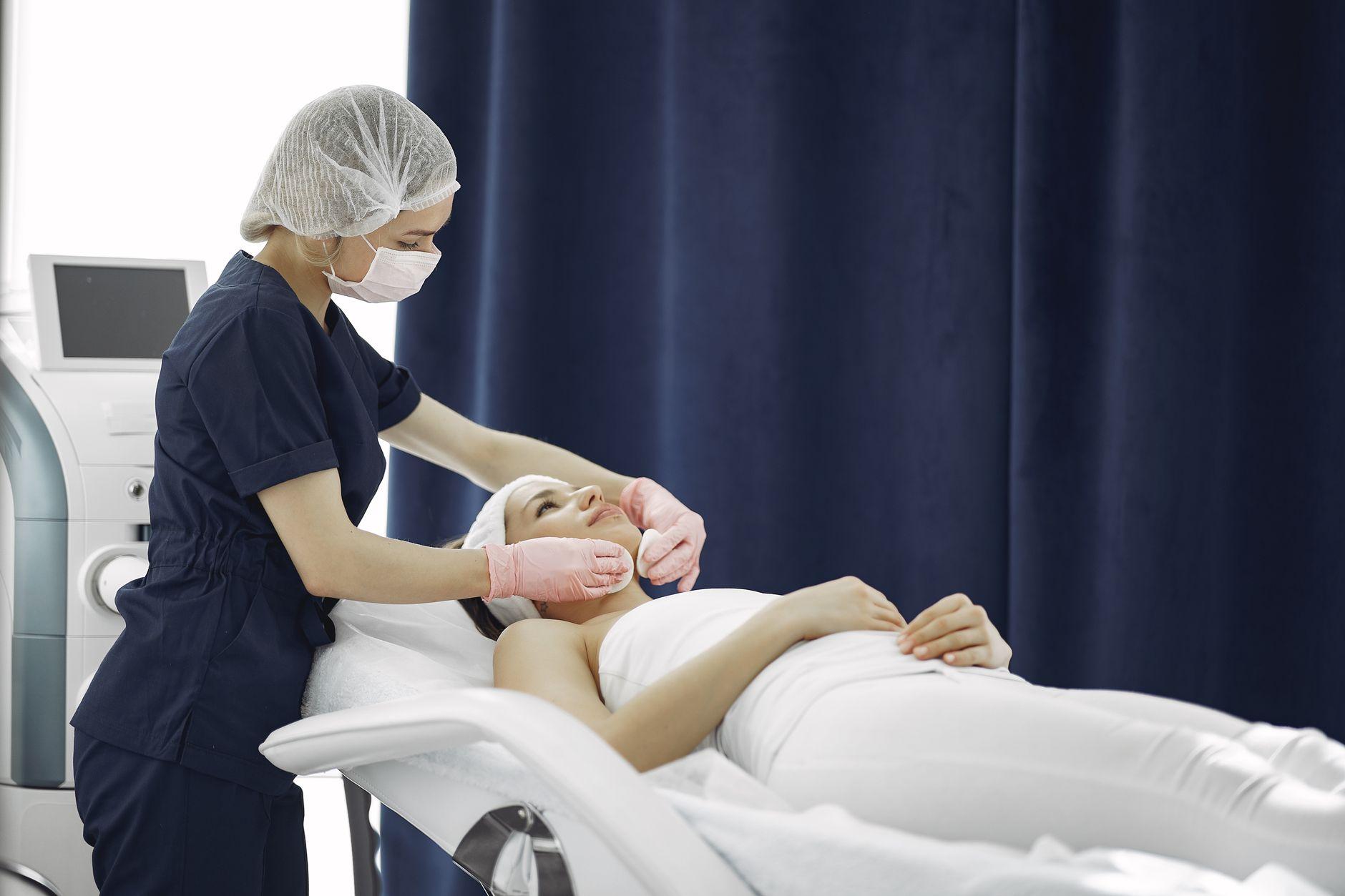
Stretch marks are a common dermatological experience across many life stages. In Pune, rapid lifestyle changes, gym workouts, weight shifts, and pregnancy often alter body shape. As skin stretches, many women and men notice distinct lines across the abdomen, thighs, hips, lower back, or shoulders. Seeking effective stretch marks treatment in Pune often begins when over-the-counter oils and firming creams fail to produce visible results.
From a medical standpoint, stretch marks are not simple cases of dry skin. They are linear dermal scars with epidermal atrophy (Lasers for treating striae: An emergent need for better evidence). Stretch marks develop when tissue under the skin tears from rapid growth or over-stretching (Stretch marks (striae)). Once this dermal tearing takes place, cosmetic lotions applied to the surface cannot repair the underlying structural break.
A dermatologist provides an objective perspective on stretch marks. Rather than promising unrealistic results, medical care views these lines as linear dermal scars that require evidence-based care (Lasers for treating striae: An emergent need for better evidence). This guide explains how stretch marks develop, why early red marks differ from mature white scars, what clinical procedures can achieve, and how people with Indian skin tones can safely protect their skin texture.
Understanding Dermal Tearing and Tissue Elasticity
To understand why stretch marks behave like scars, it helps to review skin structure. The outer layer is the epidermis, which forms a protective shield. Beneath it lies the dermis, a thicker support layer composed of an extracellular matrix. This matrix contains collagen fibres for strength and elastin networks for flexibility. Together, they allow skin to stretch and return to its original shape.
Rapid physical growth or sudden muscle expansion can place heavy mechanical stress on the dermis. Stretch marks develop when tissue under the skin tears from rapid growth or over-stretching (Stretch marks (striae)). These lines typically form perpendicular to the direction of natural skin tension (Stretch marks (striae)).
Under a microscope, tissue samples from early stretch marks reveal distinct structural changes within the skin (Stretch marks (striae)). Histopathological features of striae rubrae include (Stretch marks (striae)):
- Structural changes in collagen bundles (Stretch marks (striae))
- Elastolysis and reduced fibrillin microfibrils (Stretch marks (striae))
- Dermal oedema and prominent fibroblasts (Stretch marks (striae))
- Perivascular lymphocytes alongside an absence of mast cells (Stretch marks (striae))
Stretch marks are linear dermal scars with epidermal atrophy, visible as fine wrinkled lines and telangiectasia (Lasers for treating striae: An emergent need for better evidence). Because the primary disruption occurs in the deeper dermis, topical surface products cannot rebuild the torn elastin and collagen framework.
Red Versus White Stretch Marks: Why Staging Matters
Dermatologists classify stretch marks—medically termed striae distensae—into clear developmental stages (Lasers for treating striae: An emergent need for better evidence). Identifying the current stage helps patients understand what clinical procedures can realistically accomplish.
Early Stage: Striae Rubrae
In the acute stage, stretch marks are red or violaceous lines known as striae rubra (Lasers for treating striae: An emergent need for better evidence). They develop as reddish or purplish slightly swollen lines perpendicular to skin tension (Stretch marks (striae)). On biopsy, striae rubrae show prominent fibroblasts, dermal oedema, and perivascular lymphocytes (Stretch marks (striae)). Evaluating marks during this initial phase offers different clinical considerations compared to older, atrophic scars.
Mature Stage: Striae Albae
Over time, early lesions transform into white, atrophied, and depressed scars called striae alba (Lasers for treating striae: An emergent need for better evidence). They lighten to become whitish or flesh-coloured lines on the skin (Stretch marks (striae)).
Histologically, striae albae resemble scar tissue (Stretch marks (striae)). Skin biopsies show epidermal atrophy, loss of skin appendages, and densely packed collagen bundles arranged parallel to the skin surface (Stretch marks (striae)). Because mature striae alba represent established scar tissue, clinical approaches focus on softening dermal depressions and smoothing skin texture.
The Limitations of Over-the-Counter Creams and Oils
Many people in Pune try plant oils, cocoa butter, or packaged body creams to fade stretch marks. While these products are widely advertised to new mothers and gym-goers, pharmacology explains why surface applications have clear limits.
Topical cosmetic oils sit primarily on the outer layer of the epidermis. Their main function is to trap moisture and prevent surface water loss. In contrast, the collagen and elastin breakdown that forms stretch marks is deep in the dermis. Large cosmetic ingredients cannot pass through an intact epidermis in amounts capable of reweaving broken structural fibres.
Clinical evidence confirms these physical limits. Medical literature notes that no high-quality, large, double-blind randomised controlled trial supports the use of creams in preventing or treating striae distensae (Lasers for treating striae: An emergent need for better evidence). Furthermore, while moisturisers can be tried for stretch marks, they have not been proven to be effective (Stretch marks (striae)).
Applying simple body oils can keep the skin hydrated and comfortable. However, expecting a cosmetic cream to rebuild scarred dermal tissue creates unrealistic expectations. Altering dermal texture requires clinical modalities that work within deeper skin layers.
Clinical Modalities for Stretch Marks Treatment in Pune
When stretch marks cause aesthetic concern, dermatologists can evaluate clinical procedures that stimulate collagen remodelling. These treatments work by prompting controlled repair processes within the dermis rather than working only on the surface.
One modality studied in medical dermatology is fractional photothermolysis (Lasers for treating striae: An emergent need for better evidence). This technology creates multiple non-contiguous zones of thermal damage in the epidermis and dermis (Lasers for treating striae: An emergent need for better evidence). By sparing the tissue surrounding each wound, it stimulates epidermal turnover and dermal collagen remodelling, which results in improvement of a variety of scar types (Lasers for treating striae: An emergent need for better evidence).
Other procedural options that dermatologists may consider for stretch marks include (Stretch marks (striae)):
- Skin needling (Stretch marks (striae))
- Chemical peels (Stretch marks (striae))
- Pulsed dye laser therapy (Stretch marks (striae))
- Fractional thermolysis (Stretch marks (striae))
Patients should maintain realistic expectations before starting any procedure. No high-quality, large, double-blind randomised controlled trial supports laser or light devices for preventing or treating striae distensae (Lasers for treating striae: An emergent need for better evidence). In addition, options like chemical peels, pulsed dye laser therapy, and skin needling have not been proven to be effective in clinical studies (Stretch marks (striae)). Clinical care aims for gradual softening and better textural blending, not total erasure.
Safety Considerations and Pigmentation Risks on Indian Skin
Treating stretch marks on Indian skin tones requires strict safety protocols. Most individuals in India have Fitzpatrick skin types IV to VI, which have higher amounts of melanin. While melanin protects against sun damage, melanocytes in darker skin react readily to thermal and mechanical irritation.
In dermatological practice, most non-ablative dermal remodelling procedures carry a risk of post-inflammatory hyperpigmentation (PIH) in dark skin types (Lasers for treating striae: An emergent need for better evidence). If thermal energy is too high, the treated area may darken significantly. For this reason, non-ablative dermal remodelling procedures should be used sparingly, if at all, for treating striae distensae in darker skin (Lasers for treating striae: An emergent need for better evidence).
Dermatologists manage these risks through conservative settings and appropriate recovery intervals. Similar pigment protection rules apply across other procedures on Indian skin, including laser hair reduction, acne treatment, and acne scar treatment. Protecting the epidermis while delivering controlled energy to the target tissue is essential for safe outcomes.
Dermatologist Consultation and Tissue Care in Kalyani Nagar
In many cases, medical intervention may not be necessary. Stretch marks tend to become less conspicuous with time (Lasers for treating striae: An emergent need for better evidence). In darker skin tones, mature striae (including striae nigrae or striae caerulea) often blend naturally into the surrounding skin (Lasers for treating striae: An emergent need for better evidence). A good practice is to reassure the patient who is not overly concerned about their striae (Lasers for treating striae: An emergent need for better evidence).
For patients who want an evaluation, an in-person assessment provides clear guidance. At Skin Essence in Kalyani Nagar, Pune, every treatment plan is made by the dermatologist for the patient's skin type and goals, not read off a fixed chart. This careful approach ensures that skin tone, mark maturity, and safety risks are balanced properly.
Post-procedure care is also vital for healing. Patients are advised to use gentle barrier moisturisation and avoid harsh physical exfoliants. Daily broad-spectrum sun protection across exposed areas protects healing skin and prevents unwanted pigmentation changes.
Making Informed Choices for Skin Texture in Pune
Stretch marks are linear dermal scars with epidermal atrophy rather than simple surface blemishes (Lasers for treating striae: An emergent need for better evidence). Managing them requires clear medical facts rather than over-the-counter promises. While procedures such as fractional photothermolysis, skin needling, and chemical peels have been explored, evidence remains limited, and thermal tools carry post-inflammatory pigmentation risks on darker skin types (Lasers for treating striae: An emergent need for better evidence, Stretch marks (striae)).
Whether you have early red marks or mature white striae alba, an evaluation by a qualified doctor provides an honest view of what clinical care can offer at Skin Essence in Kalyani Nagar, Pune.
To discuss your skin texture concerns and explore personal care options for your skin type, Call the clinic, WhatsApp the clinic, or Send an enquiry.
Frequently asked questions
Can over-the-counter creams remove stretch marks?
No high-quality, large, double-blind randomised controlled trial supports the use of creams in preventing or treating stretch marks. While moisturisers can be used to keep skin hydrated, they are not proven to rebuild torn dermal collagen and elastin fibres.
What is the difference between red and white stretch marks?
Red stretch marks (striae rubrae) represent early, acute lesions showing dermal oedema, prominent fibroblasts, and structural collagen changes. Mature stretch marks (striae albae) lighten to white or flesh-coloured depressed lines resembling scar tissue with densely packed collagen bundles.
Are laser and heat-based treatments safe for Indian skin types?
Most non-ablative dermal remodelling procedures carry a risk of post-inflammatory hyperpigmentation in darker skin types. Because thermal irritation can trigger pigmentation changes, dermatologists advise that such procedures be used cautiously or sparingly in Indian skin tones.
What clinical modalities are explored for stretch marks?
Clinical options studied for stretch marks include fractional thermolysis, skin needling, chemical peels, and pulsed dye laser therapy. These treatments aim to encourage dermal collagen remodelling, though clinical evidence remains limited regarding their overall effectiveness.
This information is general and not a substitute for a consultation. Results vary from person to person.