
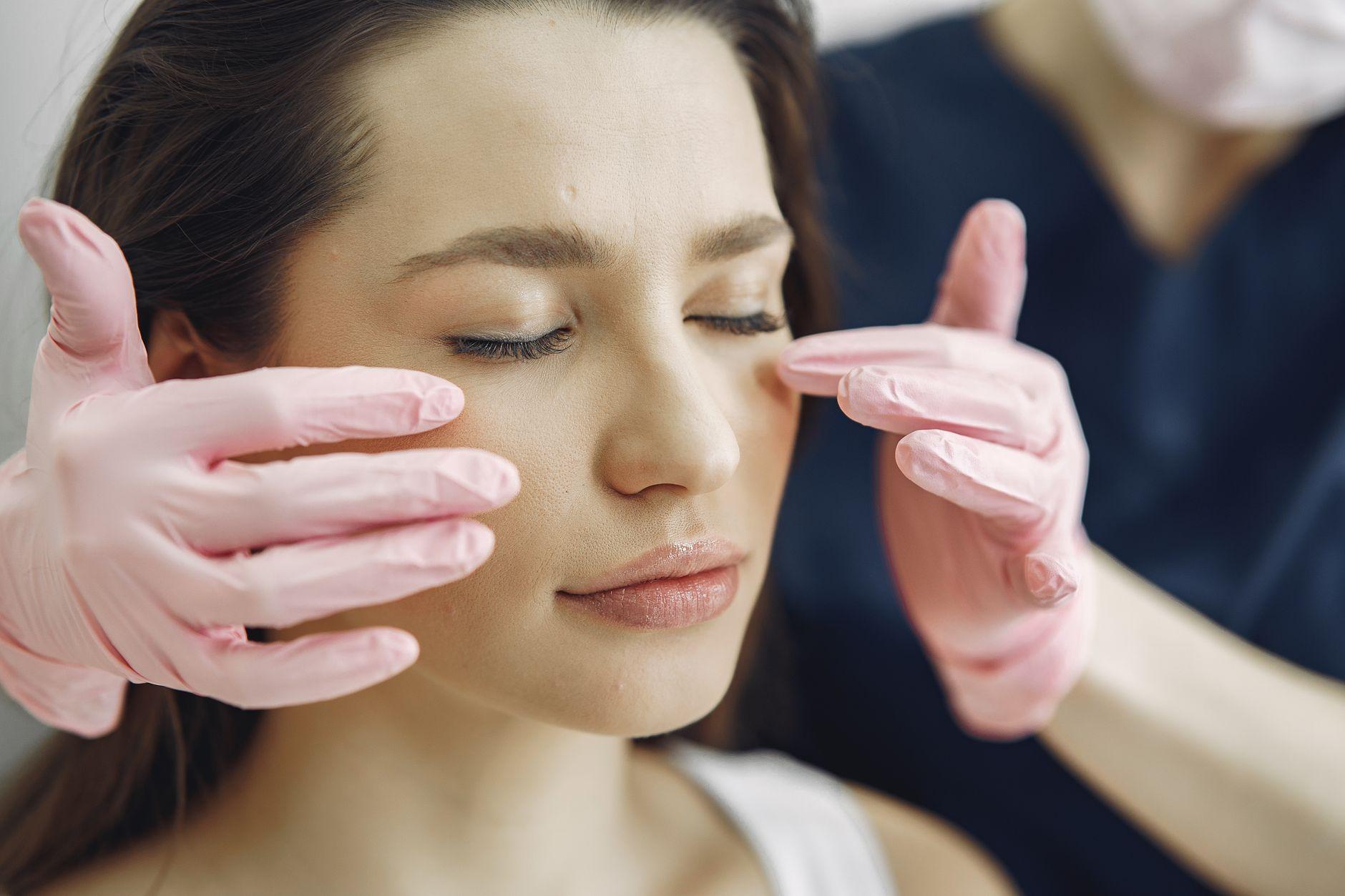
Many people in Ahmedabad want firm skin without surgery. Work schedules and family events leave little time for long recovery periods. Because of this, non-surgical skin tightening has become a popular choice. It helps people manage early looseness around the cheeks, jawline, and neck.
Mild to moderate skin laxity often shows as softening along the jawline. It can also appear as loose skin under the chin or deeper lines around the mouth. Surgical procedures cut away excess skin. Non-surgical energy devices work differently by warming deeper tissue. Patients should keep realistic expectations. Non-invasive devices offer modest and gradual improvements rather than dramatic surgical changes (Many ways to firm sagging skin).
Non-invasive methods rely on heat delivered below the surface. Because heat is involved, dermatologist guidance is vital. A dermatologist checks your skin thickness and barrier health. They also adjust device settings to match your specific skin phototype. This careful oversight helps ensure that deeper tissue warms effectively while the outer skin stays protected.
Understanding Collagen Loss and Skin Laxity
Firm skin relies on a strong network of collagen and elastin fibres in the dermis. As the body ages, collagen production slows down. Daily sun exposure and city pollution also weaken these fibres. As support drops, the outer skin begins to sag. This shift causes the gradual appearance of early jowls and looseness under the chin.
Non-surgical skin tightening addresses this loss with controlled heat. Energy devices deliver warmth deep into the tissue while keeping the outer layer calm. Heating the tissue beneath prompts the body to produce more collagen over time, and some patients feel tightening right away (Many ways to firm sagging skin).
Collagen building takes time. New fibres form and strengthen over several months. Because firming relies on the body's natural response to heat, results appear gradually rather than overnight (Many ways to firm sagging skin).
Ultrasound and Radiofrequency Technologies
Dermatologists use two primary energy methods to address loose skin: focused ultrasound and radiofrequency. Both systems use heat to stimulate collagen, but they work at different depths and on different schedules.
Focused Ultrasound
Dermatologists use ultrasound to send heat deep into the skin (Many ways to firm sagging skin). By bypassing the surface, ultrasound reaches deeper layers without irritating the epidermis. With a single treatment, most people see modest lifting and tightening within two to six months (Many ways to firm sagging skin).
Radiofrequency Heating
Radiofrequency devices warm the tissue beneath the surface (Many ways to firm sagging skin). During treatment, your dermatologist places a handpiece against the skin to deliver heat (Many ways to firm sagging skin). Most people feel some tightening right away, but peak results appear in about six months as fresh collagen forms (Many ways to firm sagging skin). With good skin care and sun protection, these benefits can last for two to three years (Many ways to firm sagging skin).
- Focused Ultrasound: Sends heat deep into the skin, with modest lifting appearing within 2 to 6 months after 1 treatment (Many ways to firm sagging skin).
- Radiofrequency: Heats the tissue beneath, with peak collagen formation seen around 6 months and lasting 2 to 3 years with proper care (Many ways to firm sagging skin).
- Doctor Guidance: Your dermatologist selects the appropriate approach after reviewing your skin laxity and facial structure.
Safe Parameters for Indian Skin Tones and Warm Climates
Treating Indian skin requires extra care around epidermal pigment. Patients with darker skin phototypes, such as Fitzpatrick skin types IV through VI, experience postinflammatory hyperpigmentation with greater frequency and severity (Postinflammatory Hyperpigmentation: A Review of the Epidemiology, C…). Epidermal melanin absorbs light across a wide spectrum from 250 nm to 1200 nm (Postinflammatory Hyperpigmentation: A Review of the Epidemiology, C…). Because of this, energy aimed at deeper tissue can be absorbed by the epidermis (Postinflammatory Hyperpigmentation: A Review of the Epidemiology, C…). This absorption raises the risk of complications such as blistering, dyschromias, and scars (Postinflammatory Hyperpigmentation: A Review of the Epidemiology, C…).
Postinflammatory hyperpigmentation also tends to be more prevalent among darker Asian subgroups, including Indians (Postinflammatory Hyperpigmentation: A Review of the Epidemiology, C…). When hyperpigmentation is confined to the epidermis, inflammation increases the production and transfer of melanin to surrounding skin cells (Postinflammatory Hyperpigmentation: A Review of the Epidemiology, C…). Within the dermis, pigment changes occur when inflammation damages basal keratinocytes, releasing melanin that is then phagocytosed (Postinflammatory Hyperpigmentation: A Review of the Epidemiology, C…). Dermal pigment takes longer to fade, making careful energy delivery essential.
Dermatologists use specific device settings to protect darker skin tones (Postinflammatory Hyperpigmentation: A Review of the Epidemiology, C…):
- Longer Wavelengths: Penetrate deeper with more selective absorption by dermal targets, making them safer for darker skin (Postinflammatory Hyperpigmentation: A Review of the Epidemiology, C…).
- Longer Pulse Durations: Using longer pulse durations helps make energy devices safer for darker-skinned patients (Postinflammatory Hyperpigmentation: A Review of the Epidemiology, C…).
- Cooling Devices: The use of cooling devices supports patient safety during treatment (Postinflammatory Hyperpigmentation: A Review of the Epidemiology, C…).
- Sun Protection: Protecting treated skin from the sun helps prevent pigment changes, especially in warm climates.
The dry, warm weather in Ahmedabad makes skin hydration and daily sun care even more important. A dermatologist customises settings to protect your skin barrier and reduce the chance of rebound pigmentation.
Assessing Candidacy for Skin Tightening in Ahmedabad
Selecting suitable candidates is key to achieving good outcomes. Non-surgical treatments provide gradual and modest results, and they may not help patients who have lots of sagging skin (Many ways to firm sagging skin).
Common treatment zones include:
- Jawline and Jowls: Tightening mild looseness along the lower edge of the face.
- Under the Chin: Firming loose skin in the submental area.
- Neck: Smoothing mild looseness across the front of the neck.
- Midface: Providing subtle support around the cheeks and mouth lines.
Ideal candidates have only a small amount of sagging skin (Many ways to firm sagging skin). They maintain a healthy body weight, eat a healthy diet, avoid indoor tanning, protect their skin from the sun, quit smoking, and drink little alcohol (Many ways to firm sagging skin). These healthy habits help the body build new collagen after treatment.
Non-surgical skin tightening is not suitable for everyone. It may not be helpful for individuals who have lots of sagging skin (Many ways to firm sagging skin). A skin-tightening procedure is also not right for anyone who is pregnant, has a skin infection, or takes certain medications (Many ways to firm sagging skin). Your doctor will review your medical history to ensure the treatment is safe for you.
The Clinical Procedure and Combined Treatment Planning
A standard skin tightening visit fits easily into a routine day. Most procedures take an hour or less (Many ways to firm sagging skin). These procedures require little or no downtime (Many ways to firm sagging skin). In addition, non-surgical skin tightening is safe for people of all skin colours (Many ways to firm sagging skin).
Before treatment starts, the clinic cleanses your face. For some devices, a numbing cream applied by the clinic may be used to keep you comfortable. Your dermatologist will advise whether this is suitable for you.
Dermatologists can also coordinate tightening alongside other skin treatments. If you deal with active breakouts or textural marks, you can combine tightening with acne treatment or acne scar treatment. In these cases, the doctor clears active inflammation first before starting collagen-stimulating procedures.
Patients managing unwanted facial hair can also pair skin firming with Laser Hair Reduction. Because both treatments deliver heat into tissue, your dermatologist will set safe rest intervals between appointments. This spacing prevents heat buildup and keeps your skin safe.
Dermatologist Care at Skin Essence
Non-surgical skin firming offers a gradual improvement that tends to appear natural (Many ways to firm sagging skin). In darker skin phototypes, postinflammatory hyperpigmentation occurs with greater frequency and severity (Postinflammatory Hyperpigmentation: A Review of the Epidemiology, C…). For this reason, professional clinical evaluation is important when planning energy treatments.
Every treatment plan should be planned by a dermatologist around the patient's skin type and individual goals, rather than read off a fixed chart. Doctor-led evaluation helps ensure appropriate energy delivery while safeguarding the skin barrier. Consultations are available for patients seeking care in Ahmedabad as well as in Kalyani Nagar, Pune.
To evaluate your skin laxity and discuss firming options, get in touch with the clinic team. You can Call the clinic, WhatsApp the clinic, or Send an enquiry to plan your consultation at the Ahmedabad clinic or the Kalyani Nagar, Pune clinic.
Frequently asked questions
How do non-surgical skin tightening treatments work?
Non-surgical skin tightening uses focused ultrasound or radiofrequency energy to warm deeper tissues beneath the surface. This controlled heat stimulates the body to produce new collagen and tighten existing fibres over time.
When can patients expect to see results?
While some people notice tightening right away, peak results typically develop gradually over two to six months as fresh collagen forms. Depending on the device and proper aftercare, improvements can last between two and three years.
Who is an ideal candidate for non-surgical skin tightening?
Good candidates are individuals with mild to moderate skin laxity around the jawline, neck, or midface who maintain healthy lifestyle habits. It is not suitable for those with significant sagging, active skin infections, or during pregnancy.
Is skin tightening safe for darker Indian skin tones?
Yes, non-surgical tightening is safe for all skin tones when managed properly. Dermatologists use longer wavelengths, extended pulse durations, and active cooling to protect epidermal melanin and avoid postinflammatory hyperpigmentation.
This information is general and not a substitute for a consultation. Results vary from person to person.