
In recent years, viral social media trends have pushed many people to try complicated skincare routines. Ten-step regimens have become popular online. These often combine harsh scrubs, strong acids, and multiple serums applied all at once. In dermatology clinics across urban India, however, doctors see the fallout: a rising number of patients with burning skin, irritation, redness, and damaged skin barriers.
Western India brings unique climate challenges. Cities like Pune move between dry winters, intense summer heat, and humid monsoon months. Heavy product layering places enormous stress on the skin in these conditions. When people copy routines made for cold, dry climates without adjusting for local weather, they often end up with a broken moisture barrier and stubborn dark marks.
A clinical routine approved by a dermatologist does not require piling on products. Instead, medical dermatology focuses on protecting the skin barrier first. Grounded in the biology of Indian skin tones and drawn from clinical experience in Kalyani Nagar, Pune, this guide explains how to simplify daily care, support your barrier, and recognise when home products should give way to medical treatment.
Understanding Melanin-Rich Skin and the Risk of Barrier Disruption
To build a sensible routine, you must first understand how Indian skin behaves. Dermatologists classify skin tones and sun reactions using the Fitzpatrick phototyping scale. In the Indian population, Fitzpatrick skin phototype V is the most common, followed closely by phototype IV (Fitzpatrick skin typing: Applications in dermatology).
Higher natural melanin levels offer some built-in defence against sunburn. However, pigment-producing cells in skin types IV and V react quickly to injury. Any irritation—such as an acne bump, a rough physical scrub, or too many peeling acids—triggers an inflammatory response. In darker skin, frequent dryness and irritation are often followed by post-inflammatory hyperpigmentation (Fitzpatrick skin typing: Applications in dermatology).
In people prone to pigment changes, these dark marks usually appear within one to two weeks after an injury and can linger for months (Fitzpatrick skin typing: Applications in dermatology). This reaction creates a common, frustrating cycle. Many people try to scrub away dark spots or layer strong clarifying products. This only irritates the skin more, leaving behind even darker marks.
A barrier-first routine breaks that cycle. It removes harsh products and supports the stratum corneum—the outermost layer of your skin. This protective outer layer holds in water and keeps out irritants. When your barrier stays healthy and intact, inflammation calms down, the skin retains moisture, and the chance of reactive dark marks drops.
Core Pillars of a Dermatologist Skincare Routine: Cleansing, Hydration, and Sun Protection
A medically sound daily routine relies on three main steps: gentle cleansing, barrier hydration, and broad-spectrum sun protection. Following these three steps consistently brings far better skin health than using complex product regimens off and on.
1. Gentle, Non-Stripping Cleansing
The main goal of washing your face is simple. You want to clear away dust, excess oil, and sunscreen without washing away essential skin lipids. People with oily or acne-prone skin often pick strong foaming face washes to get a squeaky-clean feel. That tight feeling actually means the skin has lost surface lipids. This loss causes water to evaporate faster and prompts the skin to produce more oil to compensate.
Choose gentle, soap-free cleansers that produce light foam or no foam at all. Pick formulas made to match the skin's naturally mild acidic pH. Cleanse twice a day with lukewarm water. Pat your face dry gently with a clean towel instead of rubbing.
2. Barrier Hydration and Lipid Replenishment
Hydrating the skin involves more than putting on cosmetic oils. It requires delivering water into the skin and sealing it with natural skin lipids. A helpful barrier moisturiser pairs humectants like glycerin or hyaluronic acid with lipids like ceramides. Humectants pull water into the outer skin layers, while ceramides reinforce the protective barrier.
Smooth your moisturiser over slightly damp skin right after washing your face. This simple step helps trap water inside the skin. If your skin feels sensitive or compromised, cutting back to just a gentle cleanser and a barrier moisturiser gives your skin time to recover.
3. Disciplined, Broad-Spectrum Photoprotection
Daily sun protection is essential for preventing premature ageing and post-inflammatory pigmentation. Dermatologists recommend broad-spectrum sunscreens that block both UVA and UVB rays, with an SPF rating of 30 or higher (Photoprotection). To meet recognized clinical standards, broad-spectrum sunscreens should have a critical wavelength over 370 nm and a persistent pigment darkening or UVA protection factor greater than 4 (Photoprotection).
Understanding SPF numbers helps set practical expectations. An SPF 15 sunscreen filters out around 94% of UVB rays, while an SPF 30 sunscreen filters out about 97% (Photoprotection). In chemical sunscreen formulas, protection against UVA rays is generally about 10% of the product's UVB SPF rating (Photoprotection).
Using enough sunscreen is just as important as the SPF number on the bottle. Sunscreen must be applied at a density of 2 mg/cm2 to achieve the tested level of protection (Photoprotection). For daily use, doctors follow the teaspoon rule to guide proper application (Photoprotection):
- Apply slightly more than half a teaspoon (~3 ml) to cover the face and neck (Photoprotection).
- Apply slightly more than half a teaspoon (~3 ml) to each arm (Photoprotection).
- Apply slightly more than one full teaspoon (~6 ml) to each leg, the chest, and the back (Photoprotection).
- To cover an average adult body surface area of 1.73 m2, you need around 35 ml of sunscreen (Photoprotection).
Sunscreens alone do not provide complete protection against ultraviolet radiation (Photoprotection). For effective photoprotection, doctors recommend combining sun avoidance during peak intensity hours, wearing cover-up garments, and applying sunscreen lotions (Photoprotection).
Adapting Your Regimen to Western India's Seasonal Humidity Shifts
Many people make the mistake of buying whole new product lines each time the weather changes. In western India, especially in cities like Pune, the climate moves through three distinct phases: dry, cooler winters; hot, dry summers; and warm, humid monsoons. These weather shifts alter how much oil the skin produces and how quickly water evaporates from the skin.
Instead of adding new active ingredients every few months, dermatologists recommend switching the texture—or vehicle—of your basic steps:
- Humid Monsoon Months: High air humidity slows sweat evaporation and makes the skin look oilier. Heavy creams can clog pores and lead to sweat rash or folliculitis. Switch to lightweight fluid lotions, water gels, and matte-finish sunscreens.
- Dry Winter Months: Low humidity causes skin moisture to evaporate faster, leaving the barrier dry, tight, and prone to flaking. Move to richer ceramide creams, nourishing lotions, and creamy cleansers that shield the skin surface.
- Hot Summer Months: Increased sun exposure and sweating call for water-resistant, non-comedogenic sunscreens, alongside gentle humectants that soothe skin warmth.
By adjusting product weight instead of adding new serums, you maintain a healthy barrier while adapting easily to seasonal weather changes.
Managing Active Acne and Scarring: When Self-Care Reaches Its Limits
While a balanced home routine protects your skin barrier, self-care has clear limits. Persistent acne and deep textural scars do not resolve with store-bought face washes or cosmetic oils. Squeezing spots at home or using strong acids without guidance can worsen tissue inflammation and trigger darker pigment marks.
When inflammatory acne persists, seeing a dermatologist ensures safe, targeted care. In clinical settings, superficial chemical peels using 20% to 30% salicylic acid are preferred for managing acne (Standard guidelines of care for acne surgery). This is because salicylic acid has both keratolytic and anti-inflammatory properties (Standard guidelines of care for acne surgery). For severe nodulocystic acne lesions, intralesional triamcinolone acetonide at 2.5 to 5 mg/mL can be used (Standard guidelines of care for acne surgery).
For textural scars left behind by past breakouts, over-the-counter creams cannot rebuild lost dermal structure. Clinical procedures must match the exact shape of each scar:
- Rolling Scars: Subcision is mainly useful for rolling scars; it uses an 18 or 20 gauge needle moved in a fan-like motion under the scar to release tethering fibrous bands, while avoiding danger zones like the preauricular, temporal, and mandibular areas (Standard guidelines of care for acne surgery).
- Ice-Pick Scars: For ice-pick scars, applying 95% trichloroacetic acid has been advocated in medical literature (Standard guidelines of care for acne surgery).
- Depressed and Boxcar Scars: Punch excision is indicated for scars larger than 3.5 mm, while punch elevation is used for scars with normal surface texture (Standard guidelines of care for acne surgery).
Darker skin phototypes (Fitzpatrick IV to VI) require extra care during procedural planning. Deeper wounding from dermabrasion and chemical peeling carries a higher risk of post-inflammatory hyperpigmentation (Fitzpatrick skin typing: Applications in dermatology). For this reason, medium-depth and deep phenol peels are contraindicated in skin types IV to VI due to a high risk of prolonged or lasting pigmentary changes (Standard guidelines of care for acne surgery). When using CO2 lasers on darker skin, doctors make fewer passes, leave eschars as natural dressings, and prime patients with sunscreens, retinoids, hydroquinone, and glycolic acid for two to four weeks beforehand (Standard guidelines of care for acne surgery).
Coordinating Skincare with Advanced Procedures Like Laser Hair Reduction
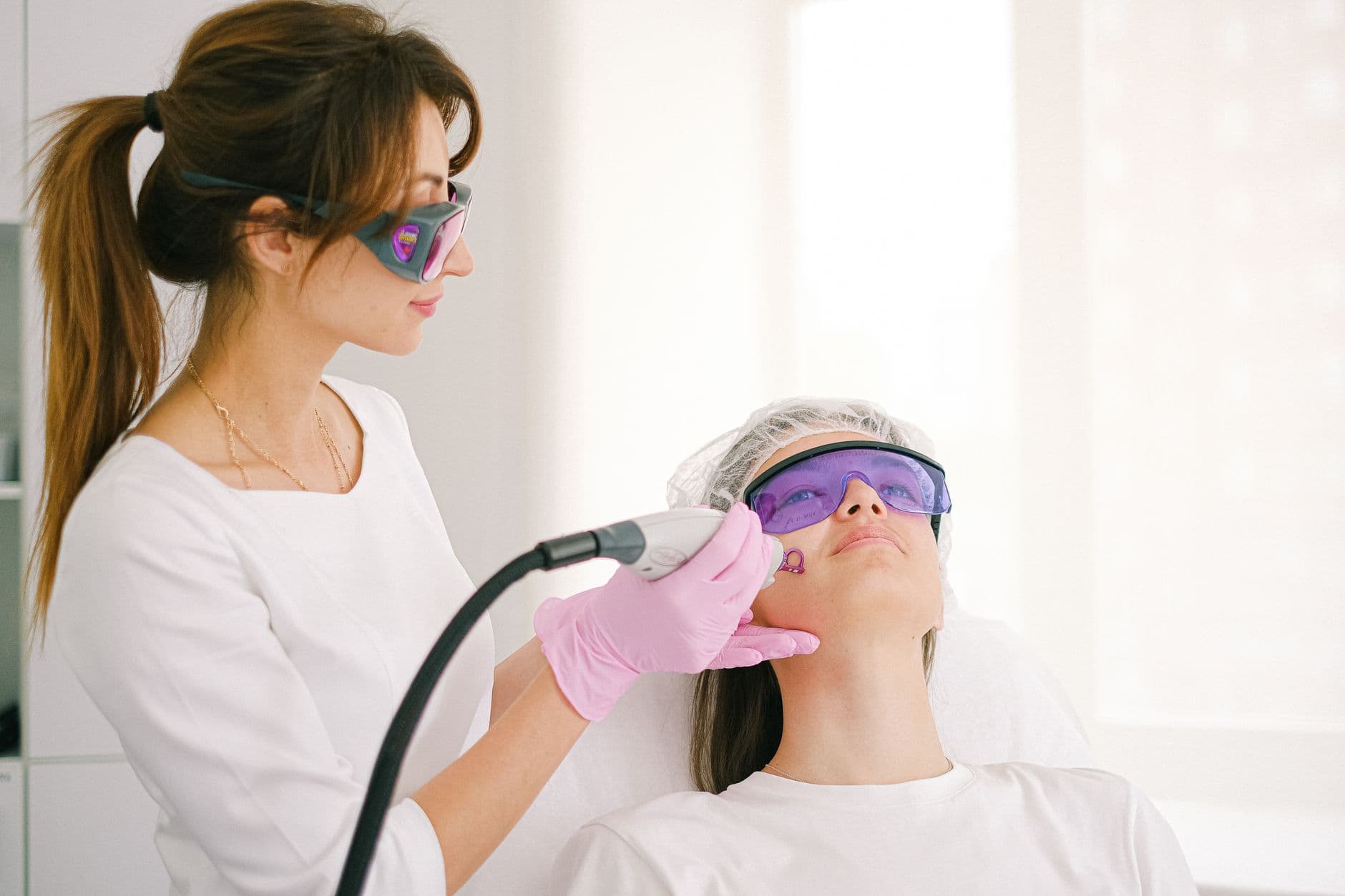
A calm, healthy skin barrier is also essential when planning clinical treatments like laser hair reduction. Energy-based devices work directly with melanin, making pre-procedure and post-procedure care vital for safety.
During laser hair reduction, light energy is absorbed by melanin in the hair follicle. Because Fitzpatrick skin types IV to VI contain abundant melanin in the upper skin layer as well, that surface pigment also absorbs light. This means darker skin types face higher risks of epidermal side effects like dyspigmentation, blistering, crusting, swelling, and scarring (Fitzpatrick skin typing: Applications in dermatology).
To reduce melanin absorption in the epidermis, longer laser wavelengths are considered safer for use on Fitzpatrick skin types IV to VI (Fitzpatrick skin typing: Applications in dermatology). Multiple devices are used in dermatology, including ruby (694 nm), alexandrite (755 nm), diode (800 nm), Nd:YAG (1064 nm), IPL (550–1200 nm), and LHE systems (400–1200 nm) (Standard guidelines of care: Laser and IPL hair reduction). Each system requires exposure lengths and energy fluences tailored to the patient's skin type (Standard guidelines of care: Laser and IPL hair reduction). Performing a pre-procedure test patch helps determine safe settings and evaluate pain tolerance (Standard guidelines of care: Laser and IPL hair reduction).
Patients preparing for laser hair reduction should follow standard preparation rules to protect their skin barrier and support good outcomes:
- Avoid Plucking and Waxing: Patients must avoid plucking, waxing, electrolysis, or bleaching in treatment areas once they decide to start laser hair reduction (Standard guidelines of care: Laser and IPL hair reduction).
- Hair Length Guidelines: Sessions are scheduled when hair length is 1 to 5 mm, shaved or trimmed in advance (Standard guidelines of care: Laser and IPL hair reduction).
- Realistic Treatment Goals: Clinicians explain that the goal is long-term hair reduction over several planned sessions rather than complete hair elimination, and maintenance sessions may be needed over time (Standard guidelines of care: Laser and IPL hair reduction).
- Procedural and Aftercare Steps: Standard precautions include cooling the skin during the procedure and applying sunscreen afterwards (Standard guidelines of care: Laser and IPL hair reduction). If hyperpigmentation occurs, it is usually temporary and can be treated with sun block, mild steroid creams, or hydroquinone under medical care (Standard guidelines of care: Laser and IPL hair reduction).
Building Long-Term Skin Health with Professional Dermatological Guidance
Building an effective routine for Indian skin does not require copying complex online trends. Healthy skin relies on a consistent, barrier-first foundation: gentle cleansing, regular hydration, and careful daily sun protection.
When issues like persistent acne, deep scars, stubborn pigmentation, or unwanted hair need attention, self-treatment carries real risks of pigmentary marks. Complex skin conditions benefit from an individual medical assessment rather than generic routines found online.
At Skin Essence in Kalyani Nagar, Pune, medical dermatology and cosmetic care is led by Dr. Daksha Patel, MBBS, MD (Skin & VD), a dermatologist and cosmetologist. Every treatment plan is made for the patient's skin type and goals rather than taken from a fixed chart. Getting professional medical guidance ensures your skin barrier remains calm, healthy, and protected across every season.
Frequently asked questions
Why does Indian skin need a barrier-first skincare routine?
Indian skin predominantly falls under Fitzpatrick phototypes IV and V, which have reactive melanin-producing cells. When the skin barrier is damaged by over-exfoliation or harsh products, inflammation quickly leads to lingering post-inflammatory hyperpigmentation.
How much sunscreen should be applied to the face and neck?
Under clinical photoprotection standards using the teaspoon rule, slightly more than half a teaspoon (~3 ml) of broad-spectrum sunscreen is required to adequately protect the face and neck.
How should skincare routines change with the seasons in Pune?
Rather than introducing new active ingredients, dermatologists recommend altering product textures. Use lightweight fluid lotions and matte sunscreens during humid monsoons, and transition to richer ceramide creams during dry winter months.
Why are deep chemical peels avoided on darker skin tones?
Medium-depth and deep phenol peels carry a significant risk of prolonged or permanent pigmentary changes and post-inflammatory hyperpigmentation in Fitzpatrick skin types IV through VI.