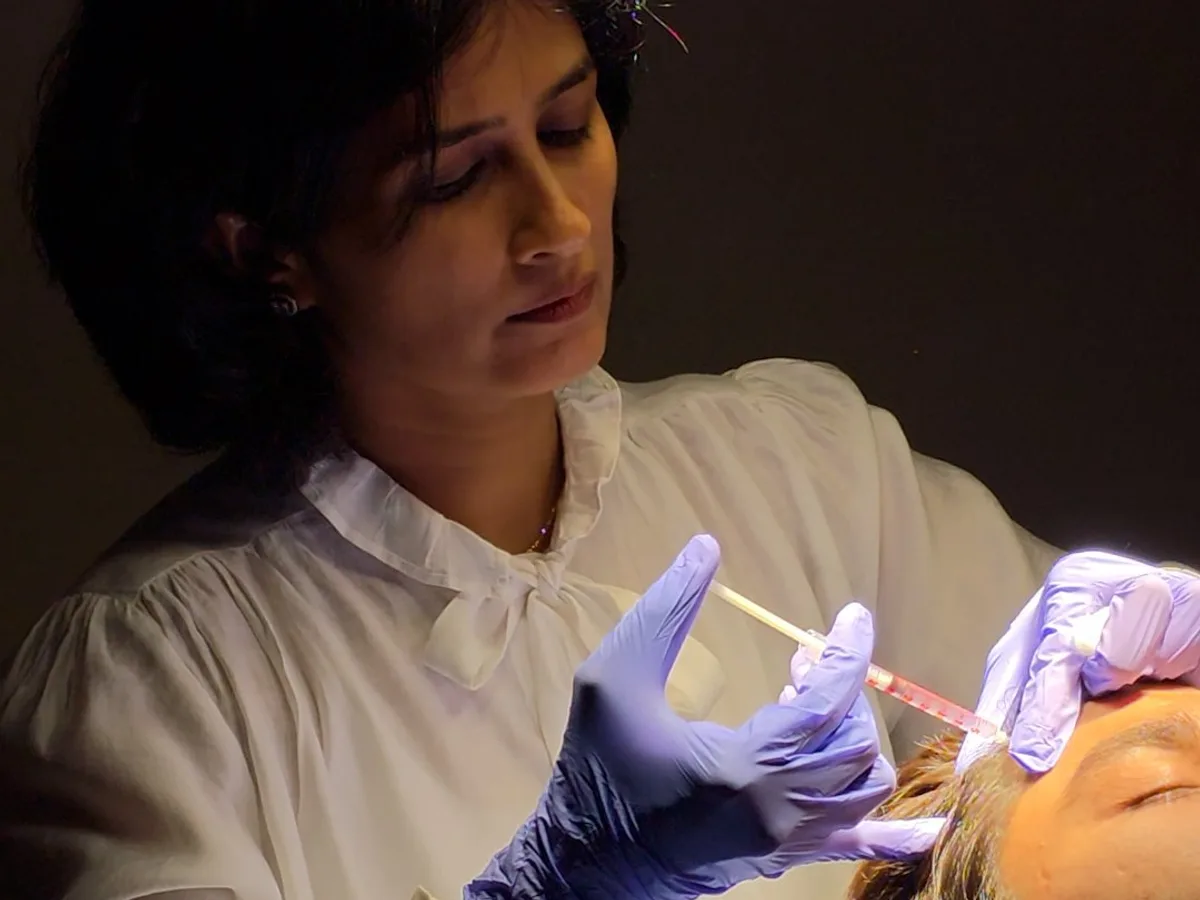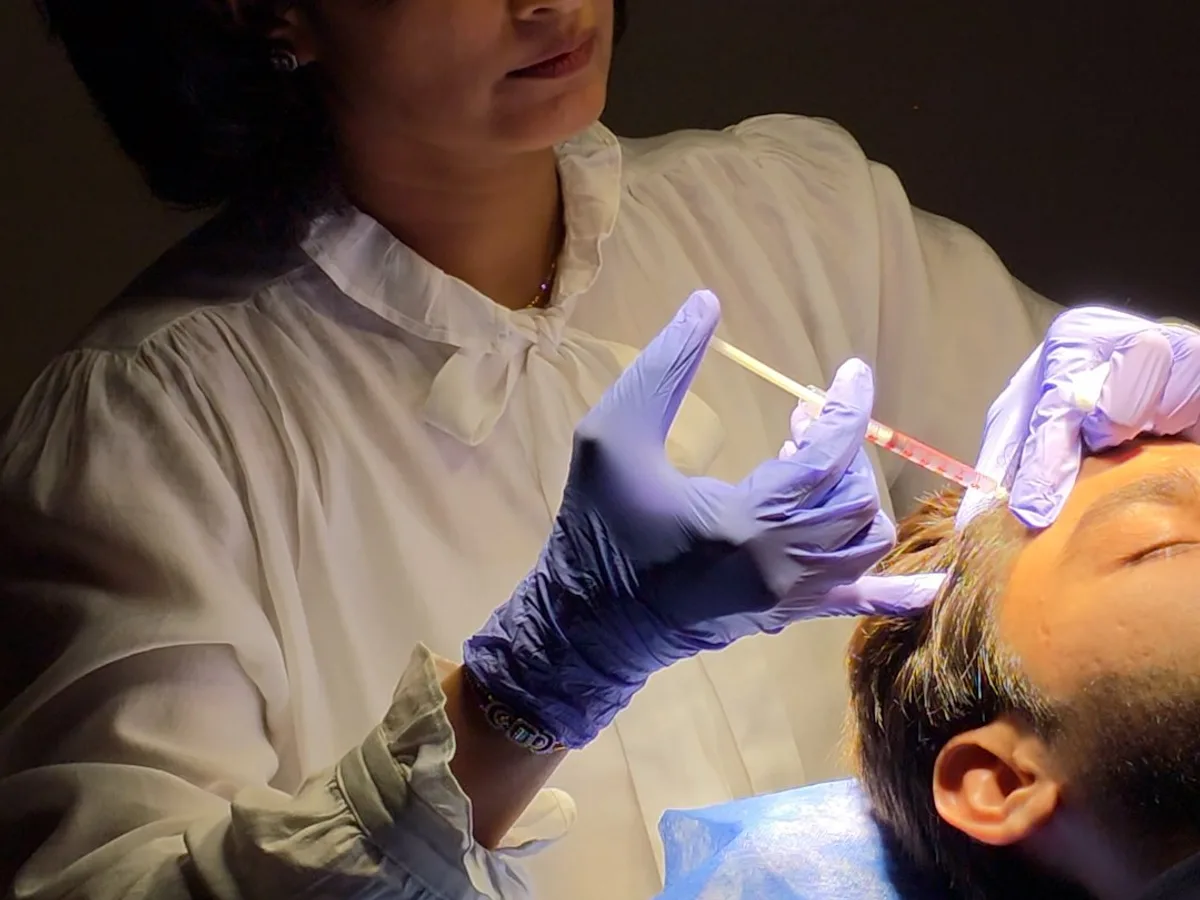

Among men and women visiting aesthetic dermatology centres across Pune, injectable treatments are frequently grouped together under broad terms such as "anti-ageing injections." This colloquial grouping often creates confusion about what individual treatments actually accomplish. Patients noticing new lines around their eyes or deeper folds around their mouth frequently wonder whether a neuromodulator like Botox or a structural dermal filler is the appropriate medical solution.
The distinction between these two procedures is rooted in facial anatomy. Facial lines do not all originate from the same physiological process. Some lines emerge purely because of repeated underlying muscular contractions, while others develop due to progressive fat pad atrophy, skeletal reabsorption, and structural deflation in the dermis. Choosing the right intervention requires distinguishing dynamic wrinkles from static folds.
When assessing a patient, an MD dermatologist does not look at lines in isolation. Instead, the clinician evaluates how the tissues move during dynamic expression compared to how they rest in static repose. This clinical guide breaks down the biological mechanisms, approved indications, and safety considerations of neuromodulators versus dermal fillers to help patients in Pune make informed choices regarding their facial health.
Dynamic Expression Lines: How Neuromodulators Relax Muscle Contraction
Dynamic wrinkles are creases created by repeated, active facial expressions. Every time you squint, raise your eyebrows, or frown, the underlying facial muscles pull the skin into micro-folds. In younger skin, adequate elasticity allows the dermis to snap back smoothly once the expression ends. Over time, repeated mechanical stress combined with gradual collagen depletion causes these movement lines to linger.
Botulinum toxin products—including well-known brand names like Botox, Dysport, Xeomin, and Jeuveau—are injectable drugs that soften wrinkles by preventing targeted muscles from contracting (Dermal Filler Do's and Don'ts for Wrinkles, Lips and More). They are not fillers and do not add volume (Dermal Filler Do's and Don'ts for Wrinkles, Lips and More). Instead, they work at the neuromuscular junction to temporarily interrupt the chemical signalling that instructs the muscle to contract, allowing the overlying skin to remain relaxed.
Approved Clinical Indications for Botulinum Toxin
Injectable botulinum toxin products are approved for the temporary improvement in the appearance of moderate-to-severe upper facial lines (Dermal Filler Do's and Don'ts for Wrinkles, Lips and More). These primarily include:
- Forehead lines: Horizontal lines that form across the upper brow when raising the eyebrows (Dermal Filler Do's and Don'ts for Wrinkles, Lips and More).
- Frown lines (glabellar lines): Vertical lines that appear between the eyebrows during frowning or intense concentration (Dermal Filler Do's and Don'ts for Wrinkles, Lips and More).
- Crow's feet: Lateral orbital lines radiating outward from the corners of the eyes when smiling or squinting (Dermal Filler Do's and Don'ts for Wrinkles, Lips and More).
Because these medications act purely on muscular tension, they cannot replenish hollows, restore deflated cheeks, or tighten loose, hanging skin. If a wrinkle exists independently of muscle contraction when the face is completely relaxed, neuromodulators alone will generally not resolve the underlying structural crease.
Static Folds and Deflation: How Dermal Fillers Rebuild Structural Support
Unlike dynamic lines, static wrinkles and facial folds are present even when the face is entirely at rest. These changes are primarily caused by gravity and structural volume loss. As part of natural facial maturation, subcutaneous fat compartments in the midface shrink and descend, deep bone support recedes, and dermal elasticity decreases. This causes overlying skin to drape downward, forming pronounced creases in the mid and lower face.
Dermal fillers are biocompatible gel substances injected beneath the skin surface to physically replace depleted volume and restore structural architecture. Temporary fillers are formulated using specific biomaterials, which include (Dermal Filler Do's and Don'ts for Wrinkles, Lips and More):
- Hyaluronic acid: A sugar that is naturally found within the human body's extracellular matrix, prized for its ability to bind water and integrate smoothly into soft tissue (Dermal Filler Do's and Don'ts for Wrinkles, Lips and More).
- Calcium hydroxylapatite: A mineral substance and major component of bone, suspended in a gel carrier for deeper structural support (Dermal Filler Do's and Don'ts for Wrinkles, Lips and More).
- Poly-L-lactic acid (PLLA): A biodegradable, synthetic polymer that works over time to support tissue structure (Dermal Filler Do's and Don'ts for Wrinkles, Lips and More).
Approved Uses for Dermal Fillers
Dermal fillers are approved for specific uses in individuals aged 22 and older (Dermal Filler Do's and Don'ts for Wrinkles, Lips and More). These approved indications include correcting moderate-to-severe facial wrinkles and skin folds (Dermal Filler Do's and Don'ts for Wrinkles, Lips and More).
Clinical applications commonly focus on restoring midface contour, replenishing hollow cheeks, and softening nasolabial folds (the creases running from the edge of the nose to the corners of the mouth) and marionette lines. By physically elevating depressed tissue layers, dermal fillers re-establish the structural scaffolding that muscle relaxants cannot provide.
Beyond Wrinkles: Acne Scars and Coordinating Combined Skin Treatments
The utility of dermal fillers extends beyond general anti-ageing care. In individuals aged 22 and older, approved uses also include correcting acne scars on the cheek (Dermal Filler Do's and Don'ts for Wrinkles, Lips and More). For patients dealing with atrophic or "rolling" acne scars, where tethered fibrotic tissue or localised collagen loss leaves distinct depressions, carefully placed temporary dermal fillers can mechanically elevate the cratered surface to create a smoother skin plane (Dermal Filler Do's and Don'ts for Wrinkles, Lips and More).
In a comprehensive dermatological setting, patients rarely present with only one aesthetic concern. For instance, a patient in Pune seeking injectable treatments for early lines may also be undergoing laser hair reduction for unwanted facial hair, or pursuing chemical peels and clinical acne treatment for persistent breakouts and acne scars. Managing these overlapping goals requires careful clinical sequencing.
Energy-based treatments, such as laser hair reduction or deep resurfacing procedures, generate localised thermal energy within the dermis. Consequently, dermatologists generally avoid performing laser hair reduction or intensive acne scar procedures directly over freshly injected dermal filler or botulinum toxin entry points on the same day. Allowing treated tissues to settle ensures that injectable products remain in their intended anatomical planes and reduces post-procedure inflammation.
Botox vs Fillers: Clinical Comparison and Safety Considerations
To evaluate these treatments objectively, patients should consider how the two modalities differ across key clinical parameters:
- Primary Mechanism: Botulinum toxin acts as a drug that relaxes underlying muscles by inhibiting contraction (Dermal Filler Do's and Don'ts for Wrinkles, Lips and More). Fillers are biomaterials that physically occupy space to restore lost tissue volume (Dermal Filler Do's and Don'ts for Wrinkles, Lips and More).
- Anatomical Focus: Botulinum toxin is primarily utilised for dynamic lines in the upper face, such as forehead creases, frown lines, and crow's feet (Dermal Filler Do's and Don'ts for Wrinkles, Lips and More). Fillers are predominantly applied in the mid-to-lower face for deep structural folds, volume loss, and cheek acne scars (Dermal Filler Do's and Don'ts for Wrinkles, Lips and More).
- Eligibility: Dermal fillers carry specific approvals for individuals aged 22 and older (Dermal Filler Do's and Don'ts for Wrinkles, Lips and More).
Safety and Treatment Sequencing
A crucial safety consideration that patients must understand is that the safe use of dermal fillers in direct combination with botulinum toxin products has not been evaluated in formal clinical studies (Dermal Filler Do's and Don'ts for Wrinkles, Lips and More). While clinical practitioners frequently address both dynamic lines and static folds in their practices, treatments should never be administered indiscriminately or combined without a clear, staged medical rationale.
A tailored evaluation by an MD dermatologist ensures that each area is treated according to its specific anatomical needs. Rather than undergoing multiple simultaneous injections, patients benefit from a structured, phased approach that monitors how the tissues respond to one intervention before introducing another.
Making an Informed Decision for Your Skin in Kalyani Nagar, Pune
Differentiating dynamic wrinkles from static volume loss demystifies injectable treatments. Softening an active forehead furrow requires modulating muscle movement, whereas lifting a heavy nasolabial fold requires restoring structural volume. Recognising these anatomical boundaries helps women and men establish realistic expectations and avoid treatments that are ill-suited to their facial structure.
At Skin Essence in Kalyani Nagar, Pune, medical dermatology and aesthetic care are led by Dr. Daksha Patel, MBBS, MD (Skin & VD), who brings over 17 years of experience in dermatology and cosmetology. Rather than following fixed charts or standardised packages, every anti-ageing treatment plan is personally customised around the patient's individual anatomy, skin type, and clinical goals.
Whether you are navigating expression lines, considering cheek contouring, or coordinating anti-ageing care alongside laser hair reduction or acne scar treatment, seeking an in-person clinical assessment is the safest first step. An evaluation by an experienced dermatologist ensures your treatment plan is grounded in medical science and tailored to your long-term facial health.
Frequently asked questions
What is the primary difference between Botox and dermal fillers?
Botox (botulinum toxin) is an injectable drug that relaxes targeted muscles to soften dynamic expression lines, whereas dermal fillers are biomaterial gels that physically restore depleted volume and structural support beneath static folds.
Can dermal fillers help with acne scars?
Yes. Dermal fillers are approved in individuals aged 22 and older to correct moderate-to-severe wrinkles, folds, and specific acne scars on the cheeks by physically elevating depressed tissue.
Can Botox and dermal fillers be administered at the same time?
The safe use of dermal fillers in direct combination with botulinum toxin products has not been evaluated in formal clinical studies. Dermatologists typically recommend a structured, phased approach rather than indiscriminate simultaneous injections.
Which facial lines respond best to botulinum toxin?
Botulinum toxin is approved for temporary improvement in moderate-to-severe upper facial dynamic lines, notably horizontal forehead lines, glabellar frown lines between the brows, and crow's feet around the eyes.